As an Amazon Associate, Noted Deals earns from qualifying purchases. Disclosure
Someone with a garage or basement shop full of power tools has already bought the big things. The gifts that land are the ones that make those tools more useful, or that do the jobs a power tool does badly: a jig that turns their drill into a joinery tool, a hand saw for the cut the table saw can't reach, a plate that keeps chisels sharp, one more clamp for the next glue-up.
That's what this list is. Each pick does a job a hobby woodworker runs into every week, comes from a maker woodworkers already know, and works alongside whatever brand of drill and saw is in the shop. Apart from the drill the pocket-hole jig works with, none of them needs power or batteries.
Every pick lists at or under $50 on its maker's or publisher's own store, at the regular price rather than a sale. We read each maker's page on November 12, and the specs below are theirs. We haven't held or used these products.
The gifts
6 products-
 1For the one who builds cabinets
Kreg Pocket-Hole Jig 320 (KPHJ320)
Check price on AmazonList price at kregtool.com$39.99As of November 12, 2026. Amazon's price may differ.
-
 2For the cuts the table saw can't make
SUIZAN Ryoba Double Edge Pull Saw, 9.5 Inch (240 mm)
Check price on AmazonList price at suizan.net$49.80As of November 12, 2026. Amazon's price may differ.
-
 3For a shop that's one clamp short
Kreg Auto-Adjust Bar Clamp, 24 Inch (KSC24)
Check price on AmazonList price at kregtool.com$49.99As of November 12, 2026. Amazon's price may differ.
-
 4For the one with dull chisels
DMT Dia-Sharp 6-Inch Bench Stone, Fine (D6F)
Check price on AmazonList price at dmtsharp.com$43.99As of November 12, 2026. Amazon's price may differ.
-
 5For the one who asks why boards cup
Understanding Wood by R. Bruce Hoadley (Hardcover)
Check price on AmazonList price at abramsbooks.com$49.99As of November 12, 2026. Amazon's price may differ.
-
 6For the stocking
Rockler Bench Cookie Plus Work Grippers, 4-Pack
Check price on AmazonList price at rockler.com$17.99As of November 12, 2026. Amazon's price may differ.
Paid link. We may earn a commission; your price is the same.
1For the one who builds cabinets
Kreg Pocket-Hole Jig 320 (KPHJ320)
- Board thickness
- 1/2 to 1 1/2 in
- Preset stops
- 1/2, 3/4 and 1 1/2 in
- Drill guides
- 2, twist-apart, with removable spacer
Paid link. We may earn a commission; your price is the same.
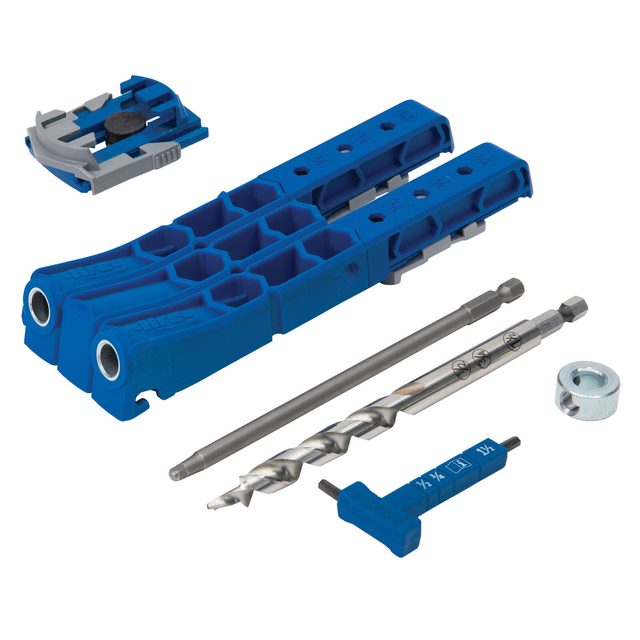
A pocket hole is a hole drilled at a steep angle into the back of one board, so a screw driven through it pulls that board tight against the next. It's how a lot of face frames, bookcases and cabinet boxes in home shops get put together, because the screw does the clamping. The Pocket-Hole Jig 320 is Kreg's portable kit for drilling those holes with the drill your woodworker already owns.
It handles boards from 1/2 inch to 1 1/2 inches thick, which covers plywood, ordinary 3/4-inch boards and two-by lumber. The two drill guides twist apart and come with a removable spacer, so the holes can sit closer together or farther apart, and each guide has stops for the three thicknesses people use most. Setup is where beginners go wrong, and Kreg has made it hard to: a gauge hung over the board's edge tells you the setting, and the drill bit and its stop collar are marked for each thickness. An anti-slip base keeps the jig still, and everything packs into a case with room for screws, with 40 sample screws in the box.
The catches. The 320 has no clamp of its own, and Kreg's manual says to clamp it to the board rather than hold it by hand; the kit includes an adapter for a clamp they already have, and Kreg's VersaGrip clamps fit it directly. The 40 sample screws run out on the first project, and the length depends on the board: Kreg's chart calls for 1 1/4-inch screws in 3/4-inch boards. And if they already own a Kreg jig, this one repeats it.
Good
- Boards from 1/2 to 1 1/2 inches thick
- Gauge and marked bit make setup quick
- Case, bit, driver and 40 sample screws included
Worth knowing
- No clamp in the box; it uses one they own
- More Kreg screws needed after the samples
- Skip it if they already have a Kreg jig
All specs
- Board thickness1/2 to 1 1/2 in
- Drill guides2, twist-apart, with removable spacer
- Preset stops1/2, 3/4 and 1 1/2 in
- Drill bitEasy-Set bit with stop collar
- Also in the boxThickness gauge/hex wrench, 6 in square-drive bit, case
- Sample screws40
- ConstructionPlastic polymer, hardened steel drill guides
- BaseAnti-slip, with clamp adapter
- ModelKPHJ320
From kregtool.com, checked November 12, 2026.
2For the cuts the table saw can't make
SUIZAN Ryoba Double Edge Pull Saw, 9.5 Inch (240 mm)
- Blade length
- 9.5 in (240 mm)
- Blade thickness
- 0.5 mm
- Teeth per inch
- 9 and 15 (rip and crosscut)
Paid link. We may earn a commission; your price is the same.
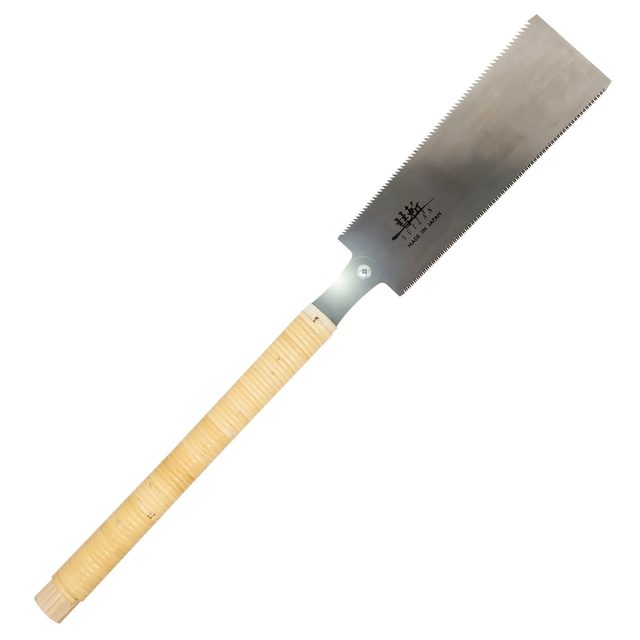
A ryoba is the Japanese all-round hand saw: one blade with teeth on both long edges, coarse teeth for ripping along the grain and fine ones for crosscutting across it. Like every Japanese saw it cuts on the pull stroke, and because the blade is pulled rather than pushed it can be far thinner than a Western saw's. Suizan's blade is 0.5 mm thick and leaves a cut 0.8 mm wide, and Suizan says a pull saw takes less effort and leaves a cleaner edge than a push saw.
In a shop full of power tools it earns its place on the small jobs: cutting a tenon, trimming a part that's already glued into a cabinet, cutting a dowel or a length of trim to rough size, or sawing a board too long or awkward for the miter saw. The blade is 9.5 inches (240 mm) long, the whole saw is just over 23 inches, and it weighs about 7 ounces. The 11.8-inch handle is wingnut wood wrapped in vinyl rattan. Suizan makes its saws in Japan from Japanese steel and sells replacement blades, so a worn blade is swapped rather than the whole saw.
The catches. A pull saw takes a few cuts to get used to: the work happens as you draw it toward you, and a blade this thin bends if it's forced or twisted. Suizan notes that each handle is wrapped by hand, so no two look quite alike, and that small cracks in the wrap can appear during making and aren't a defect. It also uses nearly the whole budget.
Good
- Rip teeth on one edge, crosscut teeth on the other
- 0.5 mm blade leaves a narrow 0.8 mm cut
- Made in Japan; replacement blades sold
Worth knowing
- The pull stroke takes some practice
- A thin blade bends if forced or twisted
- Uses nearly the whole budget
All specs
- Blade length9.5 in (240 mm)
- Teeth per inch9 and 15 (rip and crosscut)
- Blade thickness0.5 mm
- Kerf (cut width)0.8 mm
- Overall length23.2 in (590 mm)
- Handle11.8 in, wingnut wood wrapped in vinyl rattan
- Weight7.05 oz (200 g)
- Made inJapan
- ModelSR-001
From suizan.net, checked November 12, 2026.
3For a shop that's one clamp short
Kreg Auto-Adjust Bar Clamp, 24 Inch (KSC24)
- Capacity
- 24 in (60 cm)
- Reach
- 1 1/2 in (38 mm)
- Mechanism
- Automaxx auto-adjust
Paid link. We may earn a commission; your price is the same.
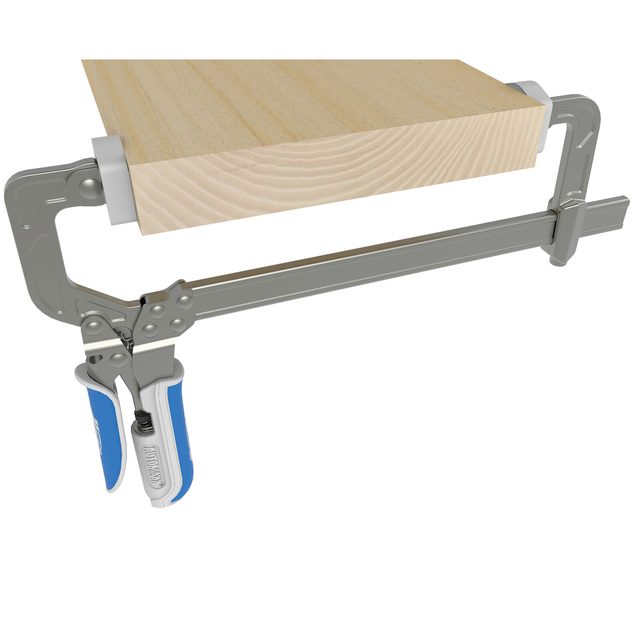
Woodworkers like to say you can never have too many clamps, and the person you're buying for almost certainly agrees. This one also does something an ordinary bar clamp doesn't. Most clamps close by sliding a jaw up to the work and then turning a screw until it feels tight. Kreg's Auto-Adjust bar clamp, built on what Kreg calls Automaxx technology, finds the thickness of the work by itself: slide the jaws against it, squeeze the handles, and it closes with the same pressure every time.
That pressure is set once, with a thumbscrew, anywhere from gentle for a delicate glue-up to very firm, and it stays set from one board to the next. That makes repeat jobs quick, like clamping a row of shelves or holding parts while the glue sets. The 24-inch version opens to 24 inches, enough for a cabinet side or a narrow panel, and its jaws reach 1 1/2 inches in from the edge. The oversized clamp faces spread the pressure over a wider area, and the clamp is all metal, with padded grips.
The catches. At this budget it's one clamp, not a set, and the 24-inch size uses the whole budget. The 1 1/2-inch reach is shallow, so it holds edges and glue-ups, not the middle of a wide panel. Kreg also makes it in 8- and 16-inch lengths, and the 16-inch lists a little lower if their clamp rack is short on the mid sizes.
Good
- Adjusts itself to the thickness of the work
- Pressure set once with a thumbscrew
- Opens to 24 inches
Worth knowing
- One clamp, at the top of the budget
- Shallow 1 1/2-inch reach
All specs
- Capacity24 in (60 cm)
- Reach1 1/2 in (38 mm)
- MechanismAutomaxx auto-adjust
- PressureSet with a thumbscrew
- Clamp facesExtra large
- ConstructionAll metal, padded grips
- Other lengths8 in and 16 in
- ModelKSC24
From kregtool.com, checked November 12, 2026.
4For the one with dull chisels
DMT Dia-Sharp 6-Inch Bench Stone, Fine (D6F)
- Size
- 6 x 2 x 1/4 in
- Grit
- Fine, 25 micron (600 mesh)
- Surface
- Continuous monocrystalline diamond
Paid link. We may earn a commission; your price is the same.
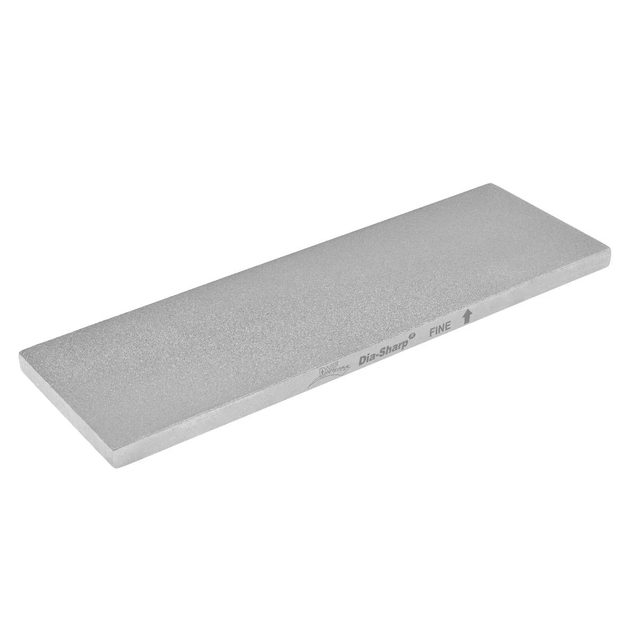
Every woodworker who owns chisels or a hand plane eventually owns dull ones, and plenty of hobbyists never set up a way to sharpen them. A diamond plate is the simplest way in. DMT's Dia-Sharp is a flat plate with a continuous surface of fine diamond, 6 by 2 inches and a quarter inch thick, and it needs no oil: it works dry or with a little water, so there's no soaking and no mess on the bench.
DMT makes its plates in a range of grits and marks each with a color. The fine one, red, is 25 micron (600 mesh), and DMT says many of its customers treat it as their medium, all-purpose grit: it brings back an edge that has gone slightly dull, and woodworkers who work through the grits use it as the step before finer polishing. That makes it the plate to give when you don't know their routine. At 2 inches wide it suits chisels and block-plane irons, and DMT makes it in the USA.
The catches. It's a single grit, so a chipped edge needs a coarser plate first and a mirror polish needs a finer one; DMT sells both in this size. DMT lists no base or box with it, and it wants a damp towel or DMT's non-skid mat under it to stay put. And sharpening by hand is a skill, so this suits someone who already sharpens or wants to learn.
Good
- Works dry or with water, no oil
- Fine grit, the all-purpose step
- Made in the USA
Worth knowing
- One grit: chipped edges need a coarser plate
- No base listed; set it on a mat or damp towel
- Sharpening by hand takes practice
All specs
- GritFine, 25 micron (600 mesh)
- Size6 x 2 x 1/4 in
- SurfaceContinuous monocrystalline diamond
- LubricantNone, or water
- Color codeRed
- Made inUSA
- ModelD6F
From dmtsharp.com, checked November 12, 2026.
5For the one who asks why boards cup
Understanding Wood by R. Bruce Hoadley (Hardcover)
- Format
- Hardcover
- Pages
- 288
- Illustrations
- More than 300 photos and drawings
Paid link. We may earn a commission; your price is the same.
Most woodworking books are about projects. Understanding Wood is about the material: how a tree grows, why a board shrinks, swells, warps and cracks, and what that means for every cut, joint, glue-up and finish. R. Bruce Hoadley, a retired professor of wood science at the University of Massachusetts Amherst, wrote it for people who work wood rather than for foresters, and its publisher calls it the cornerstone reference of a woodworking library.
It suits the woodworker who has started asking why: why a tabletop split along a glue line, why a drawer that slid in July sticks in January, how to pick and store lumber so it stays flat. The answers come with more than 300 photographs and illustrations, and this revised edition adds composite materials, adhesives and finishes to the science of seasoning, machining, joining and bending. It's 288 pages, in hardcover, from The Taunton Press, now an imprint of Abrams.
The catches. It reads like the reference it is: dense, technical and best taken a chapter at a time, and it has no project plans. This edition came out in 2000, and serious woodworkers may already have it, so check their shelf first. It also lists right at the top of this budget.
Good
- Explains why wood moves, warps and cracks
- More than 300 photos and illustrations
- Hardcover, 288 pages
Worth knowing
- Dense: a reference, not a project book
- Published in 2000; check their shelf
All specs
- FormatHardcover
- Pages288
- IllustrationsMore than 300 photos and drawings
- EditionRevised, October 2000
- PublisherThe Taunton Press (Abrams)
- Trim size8.5 x 10.9 in
- ISBN-13978-1-56158-358-4
From abramsbooks.com, checked November 12, 2026.
6For the stocking
Rockler Bench Cookie Plus Work Grippers, 4-Pack
- In the pack
- 4 Bench Cookie Plus
- Diameter
- 3 in
- Height (lift)
- 1 in
Paid link. We may earn a commission; your price is the same.
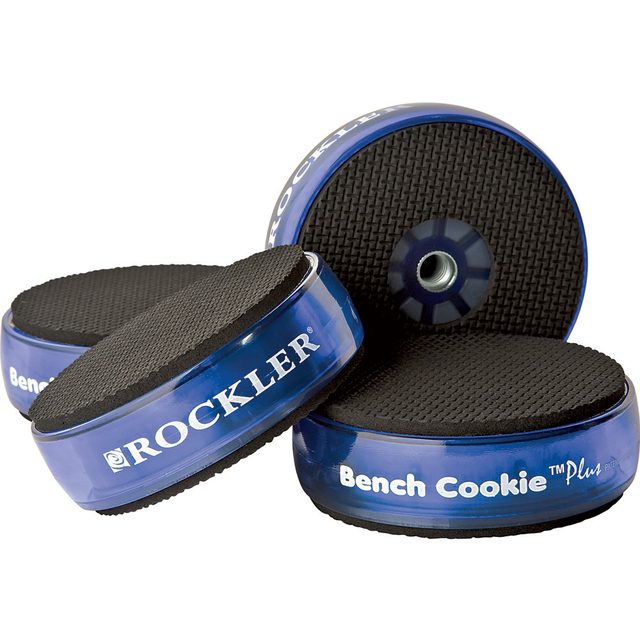
Bench Cookies are the small gift woodworkers end up buying more of. Each one is a puck 3 inches across and 1 inch tall with high-friction rubber pads. Set four on the bench, lay a board or panel on top, and they hold it in place for sanding, routing or sawing without a single clamp, while lifting it an inch off the bench.
That inch is the point. With no clamps in the way, the whole face of the work is open, so a router can run around all four edges without stopping to move anything, and the lift gives most router bits room to clear the bench. Stacking two gives most jigsaw blades enough room. The pads also keep the work off the sawdust and grit on the bench that would scratch it. The Plus version has a threaded insert in the bottom for Rockler's risers, and Rockler sells finishing cones that fit over them, all separately.
The catches. Rockler says four are enough for most average-sized panels, so a tabletop or a sheet of plywood needs another pack. They hold by friction, not by clamping, so a cut that pushes hard sideways still calls for a clamp. It's the smallest gift here, and an easy one to pair with any of the others.
Good
- Holds work for sanding and routing, no clamps
- 1 inch of lift; stack two for a jigsaw
- Threaded insert for optional risers
Worth knowing
- Four suit an average panel; big work needs more
- Grips by friction, not clamping force
All specs
- In the pack4 Bench Cookie Plus
- Diameter3 in
- Height (lift)1 in
- PadsHigh-friction rubber
- BodyPolymer/composite
- InsertThreaded, for optional risers
- ItemRockler 46902
From rockler.com, checked November 12, 2026.
How we chose
Each gift lists at or under $50 on its maker's or publisher's own store, at the regular price, and each does a job a hobby woodworker runs into every week, whether they build furniture, shop fixtures or the odd repair. We pictured someone who already owns a drill, a miter saw and probably a table saw, so nothing here repeats a power tool: the jig and the clamp make those tools more useful, and the saw and the sharpening plate take on the jobs they do badly.
We left out safety gear on purpose. Glasses, hearing protection, respirators and push sticks come down to fit and feel, and they're better chosen by the person who'll use them. We chose from the makers' published specifications and descriptions. We haven't held or used these products, and where a maker leaves out a number, we say so.
Why hand tools, in a shop full of power tools
Two picks here are hand tools because power tools leave gaps. A table saw and a miter saw make straight, repeatable cuts in boards that fit on them. A pull saw handles the rest: the part already glued into an assembly, the board too long or awkward to lift onto the saw, the tenon that needs a few strokes to fit. A sharpening plate keeps the chisels that clean out and fit those joints cutting cleanly.
Both take a little practice, and both pay it back. If you can give only one and don't know their habits, the ryoba is the easier start: it's light, it cuts on the pull, and it has a set of teeth for each direction of the grain. The sharpening plate suits someone who already owns chisels or a hand plane; if they don't, give the saw.
What we left out, and why
A good combination square is where most lists start, but Starrett's own store lists its 6-inch combination square at more than three times this budget. Swanson and iGaging, which also make combination squares, don't publish prices on their own sites, and we only list products with a maker's list price. The same rule kept out Irwin's Marples chisels and Quick-Grip clamps, Bessey's clamps and Titebond III glue: none of those makers lists a price on its own site. Veritas marking gauges are out too: we couldn't read Lee Valley's own pages on the day we checked, and every fact here comes from a maker's page.
Wixey's WR300 Type 2 digital angle gauge lists under $50 and suits anyone who sets a saw blade to an exact bevel, but its maker's site has only small photos, too small to show it properly here. For a woodworker who also wants a multitool or a cordless screwdriver, see our gifts for Dad and new homeowners guides.
Questions people ask
What is a good gift for a woodworker under $50?
Something that makes the tools they already own more useful, or does a job power tools do badly: a pocket-hole jig such as Kreg's Pocket-Hole Jig 320, a Japanese pull saw like Suizan's 9.5-inch ryoba, another clamp, or a diamond sharpening plate. All the picks here list at or under $50 on their makers' stores.
What screws does the Kreg Pocket-Hole Jig 320 need?
Kreg pocket-hole screws, in a length that depends on the board. Kreg's manual calls for 1-inch screws in 1/2-inch material, 1 1/4-inch screws in 3/4-inch boards and 2 1/2-inch screws in 1 1/2-inch lumber. The kit includes 40 sample screws to start.
What is a ryoba saw?
A Japanese hand saw with teeth on both edges of the blade: a coarse edge for ripping along the grain and a fine edge for crosscutting across it. It cuts on the pull stroke, which lets the blade be thinner than most Western saws, so the cut is narrow.
Which DMT grit should I give a woodworker?
If you don't know how they sharpen, the fine grit (red, 25 micron). DMT says many customers use it as their medium, all-purpose plate. Coarser plates are for repairing chipped edges, and finer ones are for polishing after the fine.